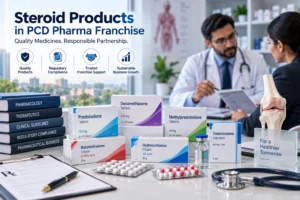
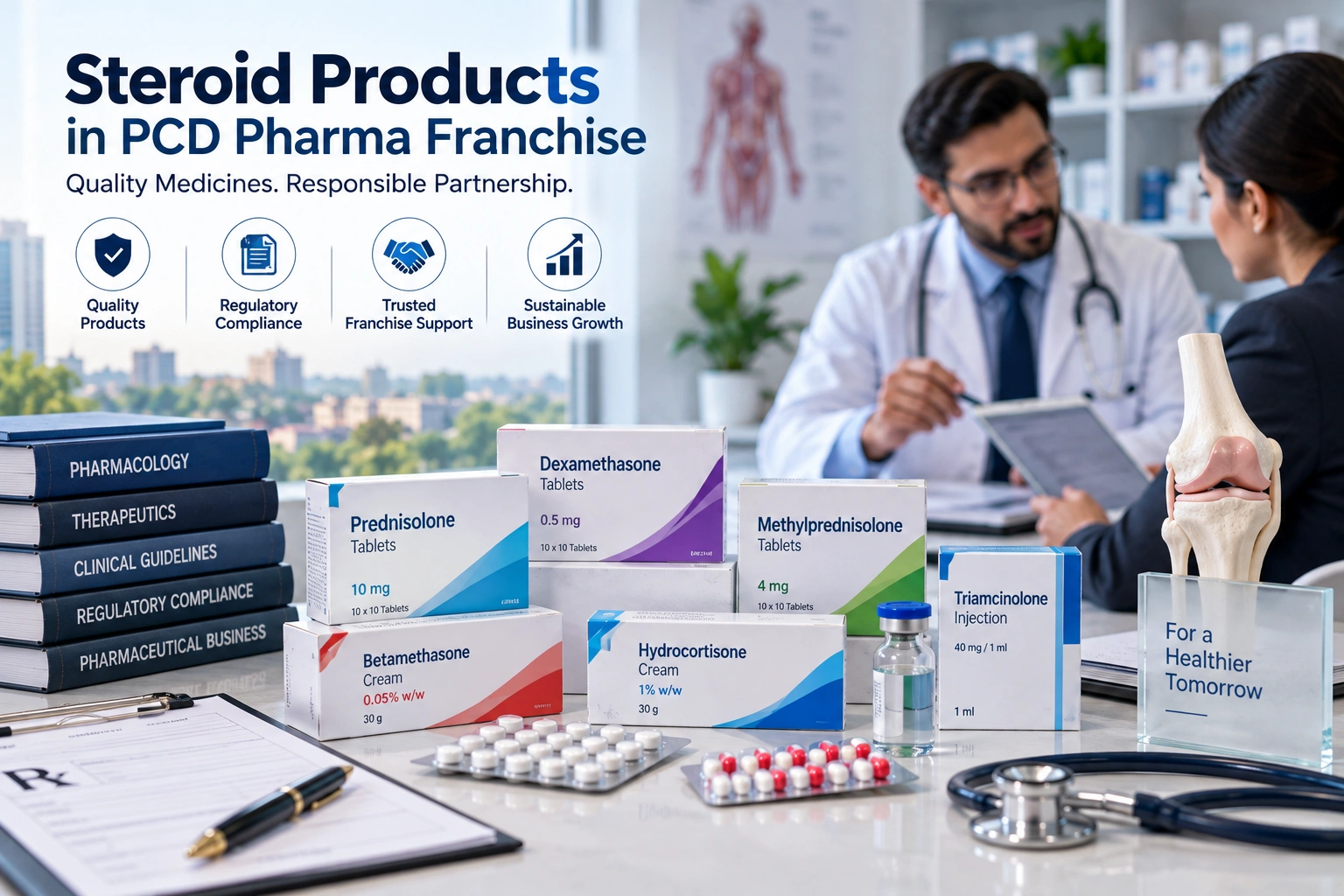
The pharmaceutical franchise industry covers a wide range of therapeutic categories, and Steroid Products in PCD Pharma Franchise can represent a specialized business segment for companies working with appropriately authorized prescription medicines. The term “steroid” covers different classes of medicines, including corticosteroids used in medical treatment and anabolic-androgenic substances that are subject to different regulatory and clinical considerations. Therefore, pharmaceutical businesses must approach this category with particular attention to product authorization, labeling, prescription requirements, quality systems, and responsible promotion.
For a PCD franchise partner, the objective should not simply be to build a large product catalogue. A responsible business model requires selecting legally marketable products, maintaining appropriate documentation, following storage and distribution requirements, and ensuring that promotional communication remains consistent with approved product information.
Chemo Biological can be evaluated by entrepreneurs interested in pharmaceutical franchise opportunities, subject to the availability and regulatory status of its current portfolio. Before entering this category, prospective partners should verify product-specific requirements and obtain professional regulatory guidance where necessary.
Understanding Steroid Products in PCD Pharma Franchise
Steroid Products in PCD Pharma Franchise refers to a pharmaceutical franchise portfolio involving authorized steroid-containing medicines that a pharmaceutical company is permitted to manufacture, market, or distribute according to applicable regulations.
It is important to understand that “steroid” is a broad term. Corticosteroids and anabolic-androgenic steroids are not interchangeable categories. Corticosteroids are used medically for various inflammatory, allergic, autoimmune, and other conditions, while anabolic-androgenic substances have different therapeutic applications and regulatory considerations.
For this reason, a franchise business should focus on the exact active ingredient, formulation, indication, regulatory classification, approved labeling, and distribution requirements of every product.
In India, prescription medicines can be subject to specific labeling and sale requirements. The Drugs Rules provide prescription warnings for medicines covered by Schedule H, H1, and X, with requirements varying according to the classification.
Consequently, franchise partners should never assume that all steroid-related medicines can be marketed or sold in the same way.
Different Types of Steroid Products
When discussing steroid products within pharmaceutical business, the first distinction should be between corticosteroids and anabolic-androgenic substances.
Corticosteroid medicines are a recognized therapeutic category and can be available in different formulations, depending on the product and its approved use. These may include oral formulations, topical preparations, injections, or other dosage forms.
Anabolic-androgenic substances are a separate category. Some substances in this area are prescription medicines, while non-medical use can create significant health and regulatory concerns. A pharmaceutical franchise should therefore deal only with products that are lawfully authorized for the intended market and handled through appropriate channels.
The dosage form also matters. Tablets, topical preparations, injectable products, and other formulations may have different storage, handling, labeling, and distribution considerations.
The Indian Drugs Rules specifically address steroid-containing preparations for topical or external use within Schedule H through an amendment reflected in the official CDSCO material.
This makes product-level regulatory verification particularly important before adding any steroid-containing medicine to a franchise portfolio.
Steroid Products in PCD Pharma Franchise and Compliance
Compliance is one of the most important considerations when evaluating Steroid Products in PCD Pharma Franchise.
Prescription medicines cannot be marketed as ordinary consumer products. Where a formulation falls under Schedule H or another prescription category, the applicable labeling and sale restrictions must be followed. The current Drugs Rules specify that Schedule H medicines carry a prescription warning and are to be sold by retail on the prescription of a Registered Medical Practitioner.
Schedule H1 products carry additional cautionary requirements, including warnings against use except according to medical advice and restrictions on retail sale without a prescription.
These rules have direct implications for pharmaceutical franchise partners. Promotional material, sales practices, distribution arrangements, product labeling, and customer communication should all remain within the applicable regulatory framework.
A franchise partner should also avoid making exaggerated claims about a steroid product. Statements about effectiveness, guaranteed outcomes, rapid results, or suitability for a particular person should not be made unless they are supported by the product’s approved information and applicable promotional requirements.
The regulatory position can also change. CDSCO continues to issue amendments, draft notifications, circulars, and other regulatory updates, so businesses should verify the current status of products and requirements before making commercial decisions.
Key Factors for Selecting a Pharmaceutical Franchise Company
Selecting the right company is essential when entering a specialized pharmaceutical category.
The first consideration should be the company’s product documentation. A prospective franchise partner should request complete and current information regarding the formulation, active ingredient, dosage form, manufacturing details, packaging, labeling, and applicable authorization.
Quality systems are equally important. Pharmaceutical products should be manufactured and handled under appropriate quality requirements. Buyers should ask for relevant documentation rather than relying solely on promotional claims.
Product availability is another practical consideration. A franchise partner needs consistent supply to serve its authorized market. Frequent shortages can create operational difficulties and affect relationships with legitimate customers.
Commercial terms should also be examined carefully. These may include minimum order quantities, pricing, payment conditions, delivery arrangements, replacement procedures, expiry-related policies, and territory terms.
Finally, evaluate the company’s approach to compliance. A professional pharmaceutical partner should understand that prescription products require responsible communication and appropriate distribution practices.
Quality and Distribution Considerations
Quality management becomes especially important when dealing with prescription pharmaceutical products. A franchise partner should maintain proper records for purchases, stock movement, batch information, and expiry management.
Storage conditions should follow the product’s labeling and applicable requirements. Temperature, humidity, light exposure, and handling conditions can vary depending on the formulation. Businesses should therefore follow the manufacturer’s specified storage instructions rather than using a universal approach for every product.
Inventory management also deserves attention. Pharmaceutical products have expiry dates, and unnecessary stock accumulation can increase the risk of avoidable inventory losses.
Distribution should take place through legally appropriate channels. Where prescriptions are required, the franchise partner should not attempt to bypass those requirements through informal sales practices.
Pharmacovigilance is another important consideration for pharmaceutical businesses. CDSCO provides guidance and resources relating to pharmacovigilance and post-marketing safety monitoring for pharmaceutical products.
Franchise partners should understand how adverse-event information and product complaints are handled within the relevant company and regulatory framework.
How to Evaluate Steroid Products in PCD Pharma Franchise
Before adding Steroid Products in PCD Pharma Franchise to a business portfolio, entrepreneurs should evaluate each product individually.
Start with its regulatory classification. Determine whether the medicine is prescription-only and identify any additional requirements associated with its classification.
Next, review the product information. The active ingredient, strength, dosage form, approved indication, contraindications, warnings, storage requirements, and labeling should be clear.
The manufacturing source should also be examined. Buyers should establish whether the product comes from an appropriately licensed manufacturer and whether relevant quality documentation is available.
Commercial viability is another consideration. A product should be evaluated based on legitimate market requirements rather than unsupported claims of high demand.
The franchise agreement should clearly define territory, supply, pricing, and other commercial responsibilities. If the company provides marketing material, the franchise partner should ensure that the material is consistent with approved product information.
This structured evaluation can help distinguish a professionally managed pharmaceutical franchise from a purely sales-focused arrangement.
Why Consider Chemo Biological?
Chemo Biological can be considered by entrepreneurs exploring pharmaceutical franchise opportunities across selected therapeutic categories. For businesses researching Steroid Products in PCD Pharma Franchise, the company’s current portfolio, product documentation, manufacturing arrangements, territory availability, commercial terms, and support structure should be reviewed before entering an agreement.
The phrase “Chemo Biological is Trusted PCD Pharma Franchise” can be used as a brand-positioning statement. Prospective franchise partners should nevertheless conduct their own due diligence and verify product-specific regulatory information.
A suitable pharmaceutical partner should be able to provide clear information about its products and explain applicable distribution requirements. This is especially important when dealing with prescription medicines.
Entrepreneurs should also discuss storage, supply, documentation, complaint handling, and other operational procedures before placing a commercial order.
Rather than selecting a company only because of its product count or promotional claims, evaluate the overall quality and compliance framework supporting the portfolio.
Common Mistakes to Avoid
One common mistake is treating all steroid medicines as one category. Corticosteroids and anabolic-androgenic substances have different medical and regulatory contexts, so each product needs individual evaluation.
Another mistake is marketing prescription products like ordinary consumer goods. Where prescription restrictions apply, sales and promotional practices must comply with those requirements.
Buying large quantities without understanding local demand can also create inventory and expiry risks. A controlled purchasing strategy is generally more appropriate for specialized pharmaceutical products.
Franchise partners should also avoid making claims beyond approved product information. Promotional language should not encourage self-medication or suggest that a medicine is suitable for everyone.
Finally, businesses should not rely on outdated regulatory information. CDSCO regularly publishes rules, notifications, circulars, and other regulatory updates.
Frequently Asked Questions
What are Steroid Products in PCD Pharma Franchise?
Steroid Products in PCD Pharma Franchise refers to an authorized pharmaceutical franchise portfolio containing steroid-based medicines. The exact products may include different steroid classes and dosage forms, so each medicine must be evaluated according to its active ingredient, approved use, regulatory classification, labeling, and applicable distribution requirements.
Is Steroid Products in PCD Pharma Franchise a prescription category?
Some steroid-containing medicines are prescription products, but classification depends on the specific medicine and formulation. Indian Drugs Rules contain prescription requirements for Schedule H and H1 medicines, among other classifications. The status of an individual product should therefore be verified using current official regulatory information.
Can steroid medicines be sold without a prescription?
Where a product is classified as a prescription medicine under the applicable rules, it should not be sold outside the permitted prescription framework. The Drugs Rules specify prescription-related requirements for Schedule H and H1 medicines.
What should I check before choosing a steroid pharma franchise?
Review the product’s regulatory classification, authorization, formulation, labeling, manufacturing source, quality documentation, storage requirements, supply reliability, commercial terms, and territory conditions. Prescription and promotional requirements should also be understood before beginning distribution.
Are corticosteroids and anabolic steroids the same?
No. Corticosteroids and anabolic-androgenic steroids are different groups of substances with different medical uses and regulatory considerations. A pharmaceutical business should identify the exact active ingredient and approved indication of every product rather than treating all steroids as one category.
Why is compliance important for steroid products?
Compliance helps ensure that prescription medicines are manufactured, labeled, promoted, distributed, and supplied according to applicable legal and regulatory requirements. It also helps pharmaceutical businesses maintain appropriate records and responsible product communication.
Can Chemo Biological provide steroid products under a PCD franchise?
The availability of any specific steroid-containing product depends on Chemo Biological’s current authorized portfolio and commercial terms. Prospective franchise partners should directly verify product availability, documentation, regulatory classification, territory terms, and supply conditions before proceeding.
Conclusion
Steroid Products in PCD Pharma Franchise represent a specialized pharmaceutical business category that requires careful attention to product classification, regulatory compliance, quality documentation, storage, distribution, and responsible promotion.
For entrepreneurs, the most important step is to evaluate each product individually. Prescription status, approved labeling, manufacturing authorization, quality documentation, commercial terms, and applicable regulatory requirements should all be confirmed before adding a product to a franchise portfolio.
Chemo Biological can be evaluated as a potential pharmaceutical franchise partner based on its current authorized product range, documentation, commercial terms, and support structure. Any product-specific claims or regulatory classifications should be verified before marketing or distribution.
If you are exploring Steroid Products in PCD Pharma Franchise, contact Chemo Biological to discuss its currently available authorized portfolio, franchise terms, documentation, and compliant business requirements.